The Real Math Behind Slot RTP (And Why It Matters)
Ask ten slot players what RTP means and you'll get ten different answers, most of them wrong. Some think it's a guarantee of what they'll get back in a session. Others assume a 96% RTP machine is automatically better than a 94% one. The truth sits somewhere in the middle, and understanding it properly will change how you pick games, set budgets, and judge whether you're actually getting a fair deal. Same logic applies to house edge in blackjack, the rake in poker, and the margin baked into sportsbook odds. Once you see the numbers clearly, the whole iGaming landscape looks different.
What RTP Actually Measures
RTP stands for Return to Player, and it's expressed as a percentage of all money wagered on a game over millions of spins, returned to players as winnings. A 96% RTP slot returns £96 for every £100 wagered — on average, over an enormous sample size. The remaining 4% is the house edge, and it's how the operator keeps the lights on.
Here's the part most players miss: RTP is a theoretical long-run figure, not a session promise. You can hit a 96% slot, lose £200 in twenty minutes, and walk away convinced the game is rigged. You can also hit the same slot and triple your deposit. Neither outcome contradicts the RTP because the sample size — your session — is microscopic compared to the millions of spins the percentage is calculated from.
Think of it like a car manufacturer claiming 50mpg. Over a year of driving, that average holds. On one aggressive trip through the Cairngorms, it absolutely doesn't.
Why Slot RTP Varies So Much
Walk through any online casino and you'll find slots ranging from around 92% to 97.5%. That 5.5% spread is massive. On a £10,000 annual wagering habit, the difference between a 94% and a 97% slot is £300 in expected losses per year.
Several factors drive the variation:
- Volatility setting — high-volatility slots often carry slightly lower RTP because the massive jackpot potential has to come from somewhere. Pragmatic Play's Sweet Bonanza sits around 96.5% at default, while some jackpot-linked titles drop to 92-94%.
- Jackpot contributions — progressive slots skim a slice of every bet into the prize pool, lowering base RTP but (occasionally) delivering life-changing wins.
- Operator adjustments — some providers let casinos pick from RTP tiers. A game listed at 96% on one site might run at 94% on another. This is legal and common, especially with certain Microgaming and Red Tiger titles.
- Bonus buy mechanics — features bought directly often have a different RTP than the base game.
The practical takeaway: check the game's help screen or the operator's game info page before you commit serious volume. It's a two-minute check that pays for itself. You will find a helpful summary at B52CLUB.
Beyond Slots: House Edge Across iGaming
Slots aren't the only game in town, and comparing RTP across verticals reveals where the best value hides.
- Blackjack — basic strategy play reduces house edge to around 0.5% on a standard six-deck game. That's roughly ten times better than a typical slot.
- Baccarat — banker bet carries a 1.06% edge, player bet 1.24%, ties a monstrous 14.4%. Skip the tie.
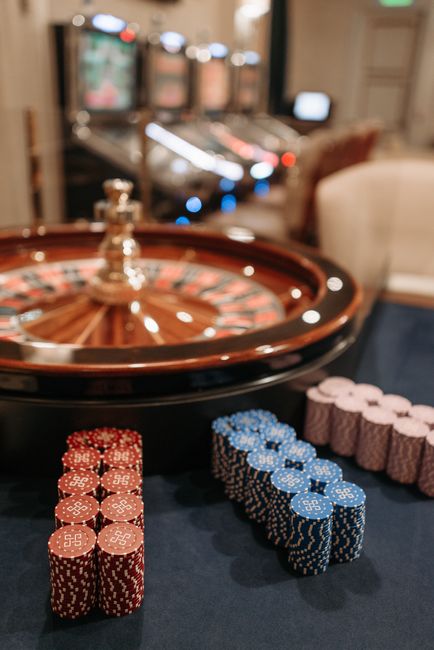
- European roulette — 2.7% edge thanks to the single zero. American roulette's double zero pushes it to 5.26%.
- Video poker — Jacks or Better with perfect strategy can dip below 0.5%. This is one of the sharpest plays in the building.
- Sportsbook — margins typically range from 2-8% depending on market and league. Sharp markets like NFL point spreads sit near 4-5%; niche props can hit 10%+.
- Poker — cash games charge rake, usually 5% capped at a few pounds. Tournaments take a fee of 5-10% of the buy-in. Poker is unique because you're playing against other players, not the house.
If you're playing purely for entertainment, this hierarchy doesn't matter much. If you're playing to extend your bankroll as long as possible, it matters enormously.
How to Use This Without Becoming a Grinder
You don't need a spreadsheet and a calculator to benefit from understanding RTP and house edge. A few simple habits make a real difference: For more on this, see B52 CLUB.
- Match game choice to goal. Want a long, slow session on a small budget? Low-volatility, high-RTP slots or blackjack. Chasing a huge payout with a small stake? High-volatility slots, and accept you'll bust often.
- Set a loss limit before you spin. Decide your session budget, and treat it as spent the moment you deposit. RTP won't save you from yourself if you keep reloading.
- Look up the return before big sessions. If you plan to wager £500 on a slot, knowing whether it's 94% or 97% is worth 30 seconds of research.
- Don't chase bonuses that lock your funds into terrible RTP games. A 100% match bonus sounds great until you realise the wagering requirement forces you through 93% RTP slots forty times.
- Understand variance. A 96% RTP slot can still eat £200 in an hour. That's not bad luck — that's standard deviation doing its thing.
The Bonus Terms Trap
This is where most players bleed value without realising. Casinos aren't charities, and deposit bonuses come loaded with conditions. The two that hurt most are wagering requirements and game weighting.
Consider a typical offer: 100% up to £100, 35x wagering on the bonus. That means £3,500 of bets before you can withdraw. If those bets go through a 95% RTP slot, your expected loss during clearing is £175 — meaning the bonus is effectively worthless for most players. It's not a scam, but it's not free money either.
Game weighting makes it worse. Slots usually contribute 100% to wagering. Table games often contribute 10% or less. So a player trying to clear a bonus on blackjack is essentially running a marathon tied to a lamp post.
Always read the terms. If the maths doesn't work, skip the bonus. Playing without one is often the sharper move.
The Bottom Line
RTP and house edge aren't secrets held by the industry — they're published, documented, and available to anyone who bothers to look. What separates a frustrated player from a smart one isn't luck. It's whether they understand that every game is a long-run losing proposition by design, and they're just choosing how gradually they want to lose, and how much entertainment they're buying with that cost.
The house edge is the price of admission. Pick your games like a grown-up, set limits you'll actually respect, and treat bonus terms with the suspicion they deserve. Do that, and you'll get more entertainment per pound than 90% of players out there — and you won't spend next month wondering where the money went.