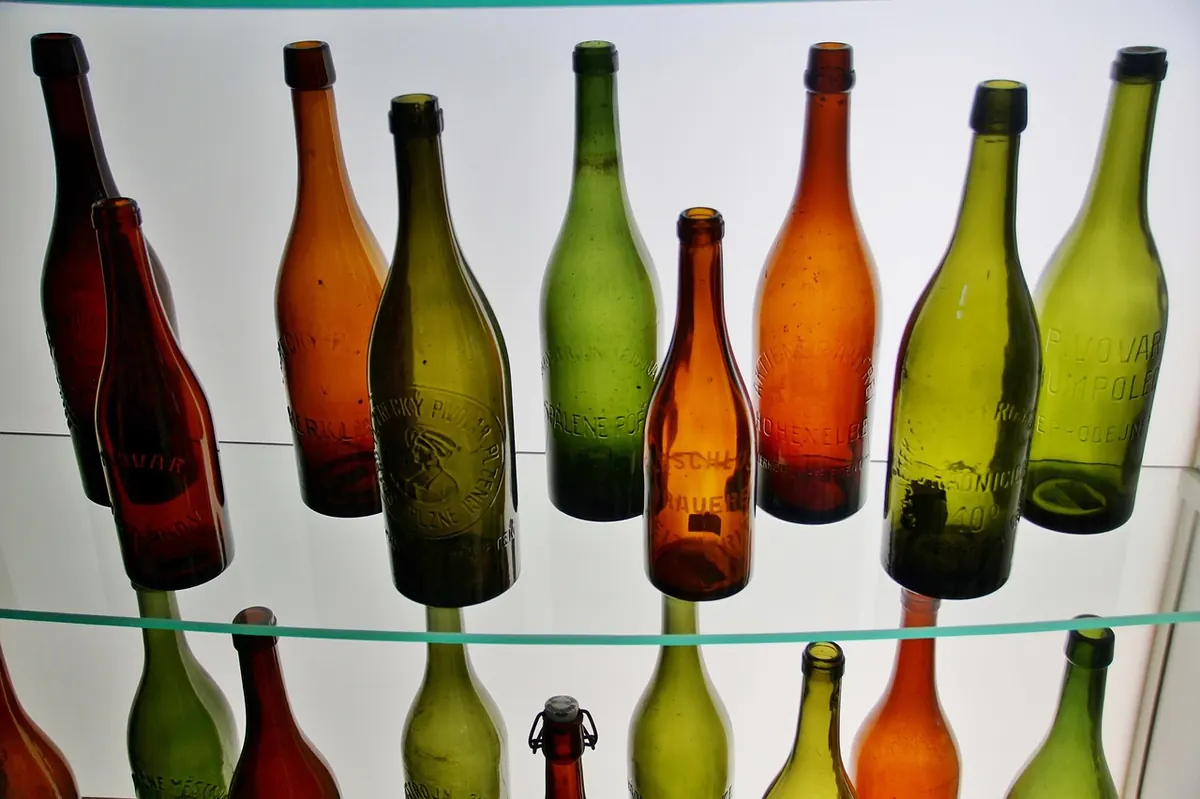
Baltic Amber Colours Explained: Honey, Cherry, Cognac and Green
Put a dozen pieces of Baltic amber on a white tray and the first thing anyone does is sort them by colour. Honey to the left, cherry to the right, and that awkward olive-green piece in the middle that nobody can quite name. It is a natural instinct, and a useful one. Colour is the quickest way to describe a stone, and it is one of the strongest signals of rarity. But amber colour is not a paint chart. It is the visible result of chemistry that took place tens of millions of years ago — and sometimes of what a workshop did to the stone last month.
What Actually Creates the Colour
Baltic amber, known mineralogically as succinite, began as resin from Eocene conifers, traditionally grouped under the name Pinus succinifera, though it probably came from several related trees. As the resin hardened, polymerised and then sat in marine sediments, two things happened. The polymer chains cross-linked, and oxygen crept in from the surface.
That is why the outside of a rough nugget is nearly always darker than the inside. The skin you see is oxidised amber; the pale material underneath has been protected for millions of years. Cut a deep brown nodule in half and you may find honey-yellow amber at its heart.
Two other factors finish the job:
- Gas bubbles. Microscopic bubbles scatter light. Lots of them and the amber turns cloudy, milky or opaque; few of them and it stays clear.
- Trapped material. Plant fragments, algae, pyrite and fine sediment all tint the resin, and the boundary between a tint and an inclusion is often blurred.
Honey, Lemon and Butterscotch
Honey is the default Baltic colour. It runs from pale lemon-yellow through clover honey to a deep, glowing butterscotch, and it is what most people picture when they hear the word amber.
Butterscotch is honey's cloudy cousin: the same basic tone, but packed with bubbles, giving an opaque, slightly waxy appearance. Good butterscotch takes a warm polish and has been popular for beads for centuries.
Honey tones are the most abundant, and they are priced accordingly. That does not make them dull. An exceptionally clean, large honey piece with no internal crackle or cloudy patches is still a fine stone, and for a new collector it is usually the best value on the table.
Cognac and Cherry
Follow the oxidation scale further and the yellows turn brown. Cognac is the colour of good brandy: a warm reddish-brown that still lets light through. Cherry is darker and redder again, deep oxblood, sometimes close to burgundy when held against a light.
Most cherry and cognac amber on the market has been heat treated. Warming amber gently in sand or an oven deepens the colour and produces small internal crackles known as sun spangles. This is a long-established workshop practice rather than a deception, but a seller should say so when asked. Natural dark amber does exist — usually as thin layers, or as the oxidised skin of a large nugget — but a solid, evenly cherry piece of any size is uncommon in nature.
Both colours are keenly sought after, especially in traditional beadwork and in markets where deep red is prized. Expect them to carry a premium over honey, without approaching the rarity of the colours below.
Green Amber: Two Very Different Things
Green is where the market gets muddy, because the word covers two materials that have almost nothing in common.
Natural green
Genuinely green Baltic amber is uncommon. Its colour usually comes from trapped plant matter and organic inclusions, sometimes algae, or from the way light moves between alternating cloudy and clear layers. Real green tends to look olive, mossy or khaki rather than jewel-bright, and it is usually cloudy rather than transparent. If you find a large, clean, vividly green Baltic stone, look carefully at how it was described.
Treated green
Most bright emerald-green amber on sale has been clarified and heat treated in a pressurised autoclave, sometimes with a tint. It can be perfectly attractive jewellery and is often sold simply as "green amber". It is not a rare natural colour, and it should not be priced as one.
Rare Colours: White, Black and Blue-Green
Milky white, sometimes called osseous or royal white, is opaque and bone-like. It is genuinely uncommon and prized by carvers, particularly the older, denser material.
Black amber is usually not black at all. Hold a thin slice against a torch and it will often show deep red or dark green. Much "black" Baltic amber is cherry or green material with a very dark, oxidised outer layer.
Blue-green is the one to treat with caution. Baltic amber can show a blue or blue-green fluorescence in strong daylight against a dark background, or under ultraviolet light. That is a surface effect, not a body colour. True blue amber comes from the Dominican Republic, and a seller who describes a Baltic piece as "blue amber" without qualification is using the term loosely.
How to Judge Colour Before You Buy
- Look at the piece in daylight on a neutral white surface, not under a shop spotlight with a warm bulb.
- Backlight it with a small torch. You will see whether the colour runs through the stone or sits in a thin surface layer.
- Check the edges and any drilled holes, where treated or layered colour is easiest to spot.
- Ask directly whether the amber has been heat treated, clarified or tinted. A straightforward dealer will answer without hesitation.
- Weigh colour against size, clarity and inclusions. A flawless large honey bead usually beats a small, cloudy cherry one.
Getting Colour Into Perspective
Colour is a useful shorthand, but it is only one variable. Two cherry beads can differ in value by a factor of several once size, clarity, crackling and workmanship are taken into account. A useful habit is to grade a stone in this order: condition first, size second, clarity third, colour fourth, and treatment status throughout. Collectors who start with colour alone tend to overpay.
If you are spending serious money on a rare colour — a large white, a natural green, anything described as blue — ask for a written description of the material and its treatments, and consider an independent gemmological opinion. For everyday purchases, buy from someone who will name the colour honestly, show you the stone backlit, and tell you what has been done to it. That conversation will teach you more about amber colour than any chart.
Photo: ivabalk / Pixabay